
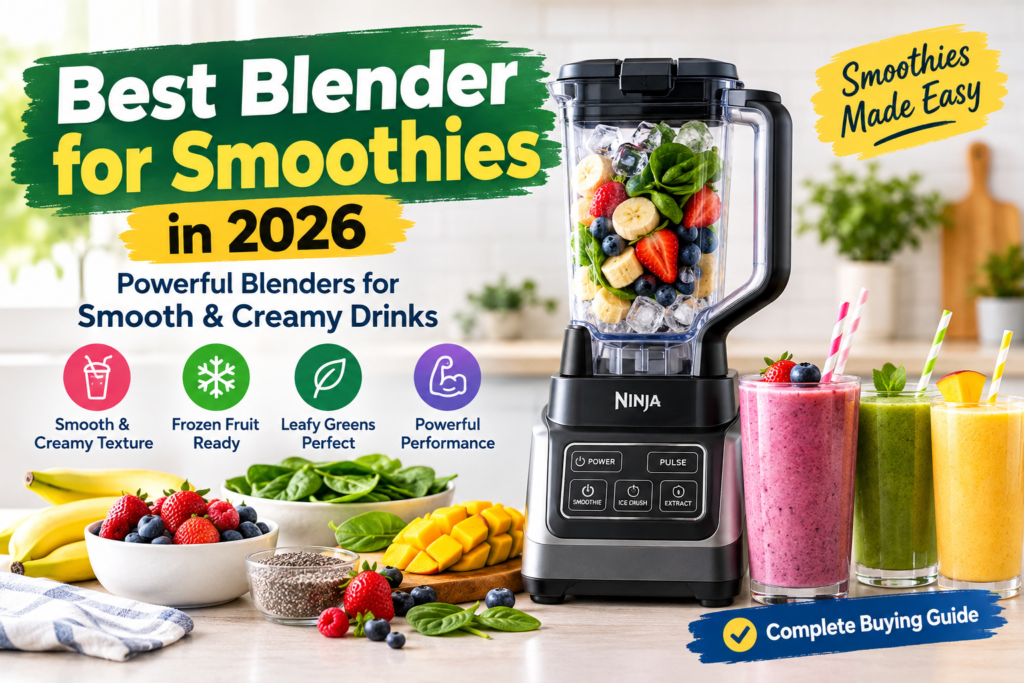
Discover the best blender for smoothies in 2026. Compare powerful blenders for creamy smoothies, frozen fruit, leafy greens, ice, protein shakes, and more.
KitchenLabZone is a reader-supported website. This means that when you click on certain links on our site and make a purchase, we may earn a small commission—at no additional cost to you.
As an Amazon Associate, KitchenLabZone earns from qualifying purchases. These affiliate links help us keep our content free, up-to-date, and helpful for our readers.We only recommend products that we genuinely believe offer value and are relevant to our audience. Our reviews and recommendations are based on research, user feedback, and personal opinions, not influenced by affiliate partnerships.Your support through these links allows us to continue providing high-quality kitchen guides, product reviews, and buying advice.
If you have any questions regarding this disclosure, feel free to contact us.
Thank you for supporting KitchenLabZone!
If your smoothie keeps coming out chunky, icy, or full of stringy kale bits, the problem usually isn’t your recipe — it’s your blender. A weak motor, a dull blade, or the wrong jar shape will leave you with pockets of unblended spinach and gritty ice no matter how carefully you layer your ingredients.
This guide is built around one question: which blenders actually deliver a smooth, creamy, drinkable texture with frozen fruit, leafy greens, ice, and protein powder — not just which blenders are popular. We looked at how current testing labs and review teams evaluate smoothie performance specifically, cross-checked manufacturer specifications, and organized the picks below by the real problems smoothie drinkers run into.
Based on current 2026 testing and product research from independent outlets, plus manufacturer specifications. We haven’t personally lab-tested every model in this guide, and we say so clearly below where that’s the case.

- NINJA BLENDING ANYWHERE: Blast through frozen ingredients with Ninja’s best portable blending power. Make perfectly smoo…
- LARGE CAPACITY: Makes up to 18 oz. of your favorite blends.
- PREMIUM COLORS: Choose a color that best fits your style.
- MORE POWERFUL MOTOR: The Ninja Professional Plus Blender with Auto-iQ features a new modern design and a more powerful m…
- POWERFUL CRUSHING: Ninja Total Crushing Blades give you perfectly crushed ice for your smoothies and frozen drinks with …
- 3 VERSATILE FUNCTIONS: 3 preset Auto-iQ programs allow you to create smoothies, frozen drinks, and ice cream, all at the…
- Power your day – 900 watts of power in this compact powerhouse turns anything from strawberries to spinach into smooth, …
- Includes: (1) 900W Motor Base, (1) Extractor Blade, (1) 32 oz. (900ml) Collosal Cup, (2) 24 oz. (700ml) Tall Cups, (3) F…
- Nutrition in no time – Did you know most smoothies can be made in under 60 seconds? Now you can fit healthful nutrition …

- POWERFUL 1200W MOTOR: 1200-watt motor base is made for powering through the toughest ingredients for smoothies, shakes, …
- AUTO-IQ INTELLIGENT TECHNOLOGY: Auto-iQ technology with a Crush preset program combines unique timed pulsing, blending, …
- XL FAMILY-SIZE PITCHER: 72-oz.* full-size pitcher is great for making large batches for the whole family, with 64-oz. ma…

- POWERFUL BLENDING: The intuitive 900-peak-watt push-to-blend motor base powers through everything inside the cup to give…
- PRO EXTRACTOR BLADES ASSEMBLY: Easily crushes ice and breaks down whole fruits and veggies to create nutrient extraction…
- BLEND TO-GO: Blend directly in one of the three included 20 oz. Ninja To-Go Cups and then twist on a Spout Lid to enjoy….
Quick Overview
| Blender | Best For | Capacity | Key Strength | Approx. Price |
|---|---|---|---|---|
| Vitamix Explorian E310 | Best overall | 48 oz (1.4L) | Independent testing rates it the top smoothie performer | $379–$449 |
| Ninja Professional Plus Blender DUO (BN751) | Best budget / families | 72 oz pitcher + 2×24 oz cups | Large-batch capacity at an entry-level price | $99–$150 |
| NutriBullet Pro 900 | Best personal blender | 32 oz cup | Compact, simple, fast single-serve blending | $79–$100 |
| Breville Fresh & Furious | Best for green smoothies | 50 oz (1.5L) | Dedicated Green Smoothie preset program | $150–$200 |
| Ninja Foodi Power Nutri DUO (CB102) | Best for protein shakes & bowls | 2×24 oz cups + 2×14 oz bowls | Power Paddle bowl jar for thick, spoonable blends | $130–$180 |
Quick buyer recommendations:
- Best Overall: Vitamix Explorian E310
- Best Budget: Ninja Professional Plus Blender DUO (BN751)
- Best Personal Blender: NutriBullet Pro 900
- Best for Green Smoothies: Breville Fresh & Furious
- Best for Protein Shakes & Smoothie Bowls: Ninja Foodi Power Nutri DUO
- Best for Families / Large Batches: Ninja Professional Plus Blender DUO (BN751)
How We Evaluated Smoothie Blenders
Rather than ranking blenders on wattage or brand reputation, we focused on the criteria that actually predict smoothie texture, drawing on independent test methodology and manufacturer documentation:
- Frozen fruit performance — does the blender fully liquefy frozen banana, mango, and berries without leaving icy fragments?
- Ice-crushing ability — can it turn ice into a fine, snow-like texture rather than gravel-sized chunks?
- Leafy green breakdown — does kale or spinach disappear into the drink, or leave stringy fibers?
- Single-serve vs. full-batch consistency — some blenders perform well in a large pitcher but struggle with small, single-serving volumes (and vice versa).
- Jar geometry and vortex — how well the shape pulls ingredients down into the blades.
- Cleaning and noise — because a blender you dread cleaning is a blender you stop using.
- Warranty length, as a rough proxy for how confident a manufacturer is in long-term durability.
We relied on published testing from outlets like RTINGS and Food Network, which run repeatable smoothie tests using fresh fruit, frozen fruit, and kale, and we verified specifications directly against manufacturer product pages. Independent testing indicates that texture quality depends far more on blade geometry and jar shape working together than on peak wattage alone — a point we unpack in the buying guide below.
If you also make cold drinks like iced coffee, our best ice makers for iced coffee guide can help you round out your countertop, and if a smoothie-specific pick here isn’t quite what you need, our broader best blenders roundup covers general-purpose picks.
Best Blender for Smoothies in 2026
1. Vitamix Explorian E310 — Best Overall Blender for Smoothies
- NINJA BLENDING ANYWHERE: Blast through frozen ingredients with Ninja’s best portable blending power. Make perfectly smoo…
- LARGE CAPACITY: Makes up to 18 oz. of your favorite blends.
- PREMIUM COLORS: Choose a color that best fits your style.
Best for: Anyone who wants the smoothest possible texture and is willing to pay more up front for a blender that lasts.
Why we recommend it: Independent testing from RTINGS names the Vitamix Explorian E310 its top pick specifically for smoothies, citing strong build quality, an easy-to-clean design, and excellent overall performance. That combination of a strong 2.0 HP motor and Vitamix’s laser-cut stainless steel blades is what makes it capable of handling smoothies, ice, and hot soups in the same jar.
- Smoothie performance: Manufacturer specifications and independent testing agree the E310 handles both single servings and full 48-oz batches with a consistently smooth result, without needing to stop and stir.
- Frozen fruit performance: RTINGS rates it as excellent for single-serving smoothies, noting it produces a very smooth puree even in small batches, and it performs just as well with full-jar batches containing fibrous ingredients like kale.
- Green smoothie performance: Strong — the same testing found it produces a smooth blend with fibrous greens at both small and large volumes.
- Ice performance: In RTINGS testing, it crushed ice to a nearly snow-like texture with no leftover chunks in under 30 seconds.
- Capacity: 48 oz (1.4 liter) Tritan container — good for 1–3 servings at a time.
- Ease of use: 10 variable speeds plus a pulse function; no automatic smoothie preset, so you control timing manually.
- Cleaning: Dishwasher-safe container; Vitamix’s self-clean cycle (warm water and a drop of soap) works in under a minute.
- Noise: Louder than personal blenders at high speed, typical of high-torque motors in this class.
- Pros: Best-in-class texture for both greens and frozen fruit; 5-year manufacturer warranty; dishwasher-safe jar; hand-assembled in the USA.
- Cons: No preset smoothie program; higher price point than most competitors; 48-oz jar is smaller than some rival full-size pitchers, so it’s not the first choice for batches larger than 3–4 servings.
- Who should buy it: Daily smoothie drinkers who want restaurant-quality texture and plan to keep the blender for years.
- Who should skip it: Buyers on a tight budget, or anyone who only needs occasional single-serving smoothies (see the NutriBullet Pro 900 below instead).
2. Ninja Professional Plus Blender DUO (BN751) — Best Budget & Best for Families
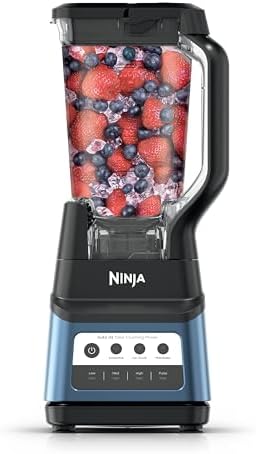
- MORE POWERFUL MOTOR: The Ninja Professional Plus Blender with Auto-iQ features a new modern design and a more powerful m…
- POWERFUL CRUSHING: Ninja Total Crushing Blades give you perfectly crushed ice for your smoothies and frozen drinks with …
- 3 VERSATILE FUNCTIONS: 3 preset Auto-iQ programs allow you to create smoothies, frozen drinks, and ice cream, all at the…
Best for: Households blending large batches on a budget, or families who want both a big pitcher and personal cups in one box.
Why we recommend it: At well under $150, this is one of the few blenders that pairs a full-size 72-oz pitcher with 24-oz single-serve cups, so it covers both a family-size smoothie and grab-and-go portions without buying two appliances.
- Smoothie performance: The 1,400-peak-watt motor and Total Crushing blades handle everyday fruit smoothies well; texture is good but not as refined as the Vitamix on tough fibrous greens.
- Frozen fruit performance: Capable with frozen fruit in moderate quantities; very full loads may need a pause-and-stir with a full 64-oz batch.
- Green smoothie performance: Adequate for spinach; kale and stringier greens benefit from chopping first.
- Ice performance: The Total Crushing blade design is built specifically for crushing ice for smoothies and frozen drinks, and it’s reliable for slushy-style textures.
- Capacity: A 72-oz Total Crushing pitcher (64-oz max liquid capacity) for large batches, plus two 24-oz single-serve cups with spout lids for smoothies on the go.
- Ease of use: Three preset Auto-iQ programs handle smoothies, frozen drinks, and nutrient extractions at the touch of a button.
- Cleaning: Pitcher and cups are top-rack dishwasher safe.
- Noise: Noticeably louder than premium models at full speed.
- Pros: Genuinely useful pitcher-plus-cups combo; strong value; widely available.
- Cons: Only a one-year limited manufacturer warranty; plastic pitcher and cups feel less premium; texture on tough greens trails higher-end models.
- Who should buy it: Families or roommates who want one blender that handles both batch smoothies and single servings without overspending.
- Who should skip it: Anyone prioritizing the smoothest possible texture over price — step up to the Vitamix or Breville instead.
3. NutriBullet Pro 900 — Best Personal Blender for Smoothies
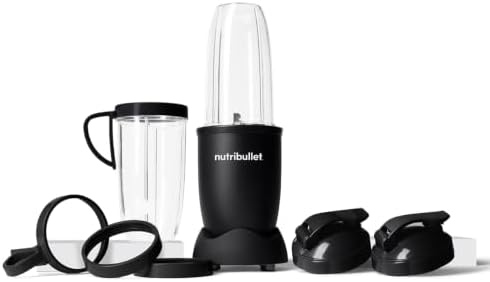
- Power your day – 900 watts of power in this compact powerhouse turns anything from strawberries to spinach into smooth, …
- Includes: (1) 900W Motor Base, (1) Extractor Blade, (1) 32 oz. (900ml) Collosal Cup, (2) 24 oz. (700ml) Tall Cups, (3) F…
- Nutrition in no time – Did you know most smoothies can be made in under 60 seconds? Now you can fit healthful nutrition …
Best for: Single people or anyone who only ever blends one smoothie at a time and wants minimal cleanup.
Why we recommend it: It’s a simple, compact, twist-and-go design that’s fast for daily single servings and takes up almost no counter space — a common request from readers comparing it to our best personal blenders guide.
- Smoothie performance: Blends a single 32-oz serving of fruit, yogurt, and liquid to a smooth consistency in under a minute for most recipes.
- Frozen fruit performance: Handles moderate amounts of frozen fruit well; very icy or densely packed cups can require a pause to redistribute.
- Green smoothie performance: The stainless-steel extraction blade is designed to handle tough ingredients like kale, seeds, and nuts, and it does a reasonable job breaking greens down for single servings.
- Ice performance: Manufacturer specifications note it can crush ice, though it’s not purpose-built for large volumes of ice the way full-size high-torque blenders are.
- Capacity: 32-oz cup, sized for one large or two small servings.
- Ease of use: No speed settings or presets — push, twist, and blend.
- Cleaning: Twist off the blade, rinse it with soap and water, and the cups go on the top rack of the dishwasher.
- Noise: Loud relative to its size, but blend cycles are short.
- Pros: Inexpensive; extremely simple; drink straight from the blending cup; very easy to clean.
- Cons: No variable speed or presets; not ideal for family-size batches; struggles more than the Vitamix or Breville with very hard ice loads.
- Who should buy it: Single-serving smoothie drinkers who want speed and simplicity over versatility.
- Who should skip it: Anyone who regularly blends for more than two people — see the Ninja BN751 instead.
4. Breville Fresh & Furious — Best for Green Smoothies
- POWERFUL 1200W MOTOR: 1200-watt motor base is made for powering through the toughest ingredients for smoothies, shakes, …
- AUTO-IQ INTELLIGENT TECHNOLOGY: Auto-iQ technology with a Crush preset program combines unique timed pulsing, blending, …
- XL FAMILY-SIZE PITCHER: 72-oz.* full-size pitcher is great for making large batches for the whole family, with 64-oz. ma…
Best for: Buyers who specifically want a dedicated green smoothie mode and a mid-range price point.
Why we recommend it: This is one of the few blenders in its price range with a preset built specifically for leafy greens. Its Kinetix blade-and-bowl system is designed to pull ingredients down toward the blades continuously, which matters most when kale or spinach tends to get stuck along the jar walls.
- Smoothie performance: The Kinetix Contoured Blade and Bowl System combines two smooth blades with three serrated blades, which Breville states is designed to produce smaller, finer particles and a smoother overall texture.
- Frozen fruit performance: Solid for moderate amounts of frozen fruit; the 1,100–1,300-watt motor (spec varies slightly by market/listing) provides enough torque for everyday frozen smoothies.
- Green smoothie performance: Strongest feature of this model — a dedicated Green Smoothie preset button is included alongside Smoothie and Ice Crush programs, so you don’t have to guess at timing for greens.
- Ice performance: A “crush and chop” function is designed to turn ice into a snow-like texture.
- Capacity: 50-oz (1.5L) BPA-free Tritan jug.
- Ease of use: Five electronic speeds plus one-touch presets, with an LCD display that counts up or down depending on the mode.
- Cleaning: The inner measuring lid, assist lid, and jug are all dishwasher safe.
- Noise: Breville markets it as quiet-running relative to its power class, thanks to the high-torque motor design.
- Pros: Purpose-built green smoothie preset; large enough jug for 2–3 servings; dishwasher-safe parts.
- Cons: Reported warranty length varies by retailer listing (1 to 3 years depending on market), so confirm coverage before buying; plastic jug rather than glass.
- Who should buy it: Anyone whose daily smoothie routine centers on spinach, kale, or other leafy greens.
- Who should skip it: Buyers who mainly blend fruit-only smoothies and don’t need a dedicated greens mode — the Ninja BN751 will do the job for less.
5. Ninja Foodi Power Nutri DUO (CB102) — Best for Protein Shakes & Smoothie Bowls
- POWERFUL BLENDING: The intuitive 900-peak-watt push-to-blend motor base powers through everything inside the cup to give…
- PRO EXTRACTOR BLADES ASSEMBLY: Easily crushes ice and breaks down whole fruits and veggies to create nutrient extraction…
- BLEND TO-GO: Blend directly in one of the three included 20 oz. Ninja To-Go Cups and then twist on a Spout Lid to enjoy….
Best for: Anyone who wants both a drinkable protein shake and a spoonable smoothie bowl from the same base.
Why we recommend it: Most personal blenders only make pourable drinks. This one includes a second jar style specifically designed for thick, spoonable textures, which matters a lot if smoothie bowls or very thick protein shakes are your goal.
- Smoothie performance: The 1,100-watt power-dense motor with Ninja’s smartTORQUE technology is designed to power through heavy loads at high speed without stalling, which matters for thick protein shakes that would bog down a weaker motor.
- Frozen fruit performance: Ninja’s Nutrient Extraction technology is built to break down tough seeds, nuts, and frozen fruits and vegetables into smooth drinks.
- Green smoothie performance: Capable for single servings, though the smaller cups mean you’ll want to chop tougher greens like kale first.
- Ice performance: Handles ice reasonably well for personal-blender volumes; not intended for large-batch ice crushing.
- Capacity: Two 700ml Power Nutri Cups with spout lids, plus two 400ml Power Nutri Bowls with storage lids — giving you both a drink format and a bowl format.
- Ease of use: Four Auto-iQ preset programs cover extractions, smoothies, bowls, and spreads/dips.
- Cleaning: All cups, bowls, and lids are dishwasher safe.
- Noise: Typical for a high-torque personal blender — noticeable but short cycle times.
- Pros: Genuinely useful two-format design (drink + bowl); strong motor for its size; good for protein powder and nut butter consistency.
- Cons: Only a 2-year manufacturer’s warranty, shorter than the Vitamix; not built for full-family batch sizes.
- Who should buy it: Protein-shake drinkers and smoothie-bowl fans who want thick, spoonable results without a full-size blender.
- Who should skip it: Anyone blending for more than 1–2 people at a time.
Full-Size vs. Personal Blender: Which Do You Actually Need?
This is the single most common mistake in smoothie-blender shopping: buying based on brand name instead of household size.
- Choose a personal blender (NutriBullet Pro 900, Ninja Foodi Power Nutri DUO) if you almost always make one serving at a time, want to drink straight from the blending cup, and prioritize easy cleanup over raw power.
- Choose a full-size blender (Vitamix Explorian E310, Breville Fresh & Furious, Ninja BN751) if you regularly make 2 or more servings, blend soups or nut butters in addition to smoothies, or want the smoothest possible texture on tough ingredients like kale stems and frozen mango.
If you’re torn, our dedicated best personal blenders guide goes deeper into single-serve options specifically, including models built purely for portability.
What Makes a Blender Good for Smoothies?
A smooth, creamy result comes down to four things working together, not any single spec:
- Motor torque (not just peak wattage) — the ability to keep blade speed consistent even when it hits resistance from ice or frozen fruit.
- Blade geometry — blades angled and stacked to create continuous movement rather than just spinning in place.
- Jar shape — a container designed to funnel ingredients back down into the blades, creating a vortex, instead of letting food get trapped along the walls or under the lid.
- Ingredient order and liquid ratio — even the best blender struggles if you add frozen fruit before any liquid.
Motor Power: How Many Watts Do You Need?
Wattage is the number every listing highlights, but it’s a poor stand-alone predictor of smoothie quality. A 1,400-peak-watt motor paired with poor blade geometry can leave more chunks than a well-engineered 1,000-watt motor. Peak wattage (measured for a fraction of a second at startup) is also different from sustained operating wattage — the number that actually matters while you’re blending frozen fruit for 45 seconds straight.
As a rough starting point for smoothies specifically:
- 600–900 watts: Fine for fresh fruit, yogurt, and light ice in personal-blender volumes.
- 1,000–1,300 watts: A comfortable range for regular frozen fruit and moderate ice in full-size jars.
- 1,400+ watts (or 2 HP-class motors like the Vitamix): Best for daily kale, dense frozen fruit, and larger batches without slowing the blades.
Treat wattage as one input, not the deciding factor — independent testing results and real ice/frozen-fruit performance tell you far more than the number on the box.
Blade Design
Look for stainless steel blades set at different angles or heights (sometimes marketed as “hammermill,” “Kinetix,” or “Total Crushing” designs). Multi-level blades pull ingredients from the top of the jar down toward the cutting edge continuously, which is what prevents the classic problem of fruit “floating” above the blades untouched.
Jar Shape and Vortex
Narrow, tapered, or hourglass-shaped jars tend to create a stronger vortex that continuously recirculates ingredients into the blades. Wide, straight-sided jars can leave dead zones in the corners where fruit or greens sit untouched — this is one reason smaller personal-blender cups often produce smoother single servings than a half-full large pitcher.
Speed Controls and Preset Smoothie Programs
Manual speed dials give you more control but require you to judge blending time yourself. Preset programs (like the Breville’s Green Smoothie button or Ninja’s Auto-iQ settings) automate timing and pulsing patterns, which is genuinely useful for consistency if you don’t want to babysit the blender.
Capacity
Match jar size to how many servings you actually make:
- 20–32 oz: One serving.
- 48 oz: One to three servings.
- 64–72 oz: Family batches of three or more servings.
Ice Crushing
Ice is one of the toughest tests for any blender because it’s dense and doesn’t release liquid the way fruit does. Blenders marketed with dedicated “ice crush” functions or serrated blade sections generally perform noticeably better here than blenders without one.
Frozen Fruit
Frozen fruit behaves differently than ice — it’s softer but can clump. A wider blade sweep and a strong initial pulse cycle both help break up clumps before full-speed blending begins.
Leafy Greens
Fibrous greens like kale are the most common cause of “stringy” smoothies. Blenders with a genuine vortex and higher sustained torque tend to fully break down stems and ribs; weaker blenders leave visible flecks.
Cleaning
Dishwasher-safe jars and blades save meaningful time daily. Self-cleaning cycles (soap, warm water, and a 30–60 second run) are a major convenience if you’re making smoothies every morning.
Noise
High-torque motors are inherently loud at full speed. If noise is a dealbreaker — for example, blending before others in the house are awake — look specifically for models marketed with quiet-operation claims and confirm them against independent test results where available, since manufacturer noise claims aren’t always directly comparable across brands.
Warranty and Durability
Warranty length is a reasonable (though imperfect) signal of how long a manufacturer expects the motor to last under normal use. In this guide, coverage ranges from 1 year (Ninja BN751) up to 5 years (Vitamix Explorian E310) — worth weighing against the price difference.
Common Smoothie-Blending Mistakes
- Adding liquid last. Liquid should generally go in first so the blades have something to move immediately, rather than grinding against solid or frozen ingredients with nothing to circulate.
- Overloading the jar. Filling past the max-fill line reduces vortex movement and is the single most common cause of chunky results.
- Skipping the pulse step. A few short pulses before running continuously helps break up large frozen chunks before they get pinned against the jar wall.
- Using whole ice cubes in a low-torque blender. Crushed or smaller ice pieces blend far more evenly in blenders under about 1,000 watts.
- Not pre-chopping fibrous stems. Thick kale or celery stems are the most common cause of stringy texture, even in powerful blenders.
How to Make Smoother, Creamier Smoothies
If your current blender is leaving chunks, try these adjustments before buying a new one:
- Layer smart: liquid → soft/fresh ingredients → protein powder or powders → frozen fruit → ice, on top.
- Use frozen banana or Greek yogurt instead of extra ice for creaminess without diluting flavor.
- Blend greens with liquid first, then add frozen fruit, so the blades establish a vortex before hitting frozen resistance.
- Pulse before you blend continuously to break down large frozen clumps.
- Don’t over-fill — leave headroom for ingredients to circulate.
- Give it time. A true smooth texture with frozen fruit and greens often takes 45–60 seconds, not 15.
Are Expensive Blenders Worth It?
For most casual smoothie drinkers, a well-reviewed $100–$200 blender like the Ninja BN751 or Breville Fresh & Furious will produce a perfectly good daily smoothie. The case for spending more — into Vitamix territory — comes down to three things: independent testing consistently rating texture higher on tough ingredients like kale and frozen fruit, a meaningfully longer warranty, and the ability to also handle hot soups, nut butters, and flours in the same jar. If you blend daily, for multiple people, or with consistently tough ingredients, the price difference tends to pay for itself in performance and longevity. If you blend a few times a week with mostly soft fruit, it’s a harder case to make.
How Much Should You Spend?
- Under $100: Entry-level personal blenders (NutriBullet Pro 900). Fine for simple fruit smoothies; less capable with heavy ice or dense greens.
- $100–$200: The sweet spot for most households — full-size pitchers with real ice-crushing and multiple speeds (Ninja BN751, Breville Fresh & Furious).
- $350–$500+: High-performance blenders (Vitamix Explorian E310) for daily use, tough ingredients, and multi-purpose kitchen tasks beyond smoothies.
Buying Guide: How to Choose
Ask yourself these questions before buying:
- How many servings do I make at once? One → personal blender. Two or more → full-size.
- Do I regularly use frozen fruit and ice, or mostly fresh? Frozen-heavy routines justify a higher-torque motor.
- Are leafy greens a daily ingredient? If so, prioritize models with proven green-smoothie performance or a dedicated preset.
- How much am I willing to hand-wash? If none, confirm dishwasher-safe parts before buying.
- How long do I want this blender to last? Compare warranty length against price.
Final Recommendations
If you want the smoothest possible texture and plan to use it daily for years, the Vitamix Explorian E310 is the strongest overall pick based on current independent testing. If you’re outfitting a family kitchen on a budget, the Ninja Professional Plus Blender DUO (BN751) gives you a large pitcher and portable cups for a fraction of the price. Solo smoothie drinkers will get the most convenience from the NutriBullet Pro 900, green-smoothie regulars should look at the Breville Fresh & Furious for its dedicated preset, and anyone chasing thick protein shakes or smoothie bowls should consider the Ninja Foodi Power Nutri DUO.
Whichever you choose, the biggest texture improvement most people can make is free: layer ingredients correctly, don’t overfill the jar, and give frozen ingredients enough blending time.
Frequently Asked Questions
What is the best blender for smoothies in 2026? Based on current independent testing, the Vitamix Explorian E310 is the top-rated overall pick for smoothie performance, with strong results on frozen fruit, greens, and ice. Budget-conscious buyers and families are generally better served by the Ninja Professional Plus Blender DUO (BN751).
What blender makes the smoothest smoothies? Independent testing consistently favors blenders with high sustained torque and a strong jar vortex over blenders that simply advertise high peak wattage. The Vitamix Explorian E310 currently rates highest for overall smoothie texture in published testing.
What blender is best for frozen fruit? Look for a high-torque motor and multi-level blades. The Vitamix Explorian E310 and Breville Fresh & Furious both handle frozen fruit well, while the Ninja Foodi Power Nutri DUO is a strong personal-size option for frozen fruit and nut-based smoothies.
How many watts do I need for smoothies? There’s no universal minimum, but 1,000+ watts of sustained (not just peak) power is a reasonable target for regular frozen fruit and ice. Personal blenders in the 600–900-watt range can still work well for fresh-fruit smoothies in smaller batches.
Is Vitamix worth it for smoothies? For daily smoothie drinkers, especially those blending frozen fruit and leafy greens, yes — independent testing and a 5-year warranty support the price premium. Occasional or fruit-only smoothie drinkers may not need to spend that much.
Is Ninja good for smoothies? Yes, for everyday use. Ninja’s Total Crushing and smartTORQUE blade systems handle typical frozen fruit and ice well, though texture on very fibrous greens generally trails premium models like Vitamix.
Is a personal blender better for smoothies? Only if you’re blending single servings. Personal blenders like the NutriBullet Pro 900 are faster to clean and use less counter space, but full-size blenders generally handle larger batches and tough ingredients more consistently.
What is the best blender for green smoothies? The Breville Fresh & Furious stands out for its dedicated Green Smoothie preset program, while the Vitamix Explorian E310 delivers the smoothest overall texture with fibrous greens according to independent testing.
Can a blender crush ice for smoothies? Most modern blenders marketed for smoothies can crush ice to some degree, but results vary significantly. Blenders with dedicated ice-crush functions and higher sustained torque, like the Vitamix Explorian E310 and Ninja BN751, produce a finer, more consistent texture than budget models.
How do I make my smoothie extra creamy? Use frozen banana or Greek yogurt instead of extra ice, layer liquid before solids, and don’t overfill the jar so ingredients can fully circulate through the blades.
Why does my blender leave chunks? Usually one of three causes: overfilling the jar (reducing vortex movement), adding frozen or dense ingredients before liquid, or a motor/blade combination that isn’t powerful enough for the ingredients being used. Try pulsing first and reducing batch size before assuming you need a new blender.
How much should I spend on a smoothie blender? Most households are well served in the $100–$200 range. Spend more (into Vitamix territory) if you blend daily with tough ingredients or want multi-purpose use beyond smoothies; spend less if you’re an occasional, fresh-fruit-only smoothie drinker.
Prices and specifications reflect manufacturer listings and retailer data available as of publication and are subject to change — always check current pricing before purchasing. This article contains Amazon affiliate links; KitchenLabZone may earn a commission on qualifying purchases at no additional cost to you.